Roofing Contractor Insurance
Insurance Built for Roofing's Real Fall-Severity Risk
Roofing sits in a harder insurance market than almost any other construction trade — not because roofers are careless, but because a fall from a roof carries a severity profile that standard carriers are structurally cautious about. We place roofing coverage the way underwriters actually evaluate it: specialty-market GL, a workers' comp class code that reflects real risk, and the bonding and umbrella limits contracts increasingly demand.
Why roofing is the hardest page on this site
Roofing's risk profile isn't a variation on general construction — it's a different category
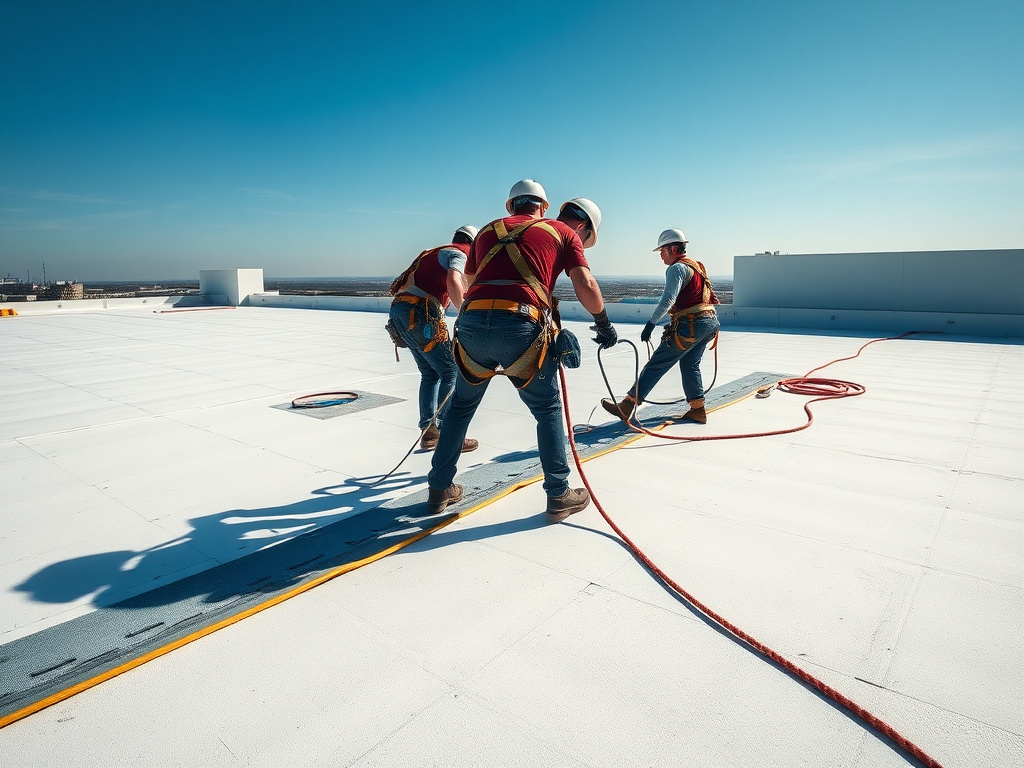
Every trade on a jobsite carries some injury risk, but roofing carries the highest fall-injury severity of any trade this site covers, and that fact shapes almost everything about how roofing insurance gets written. It isn't that roofers fall more often than other trades work at height — it's that when a fall happens from a roof edge, off a ladder, or through an unmarked skylight opening, the resulting injury is typically far more severe than a comparable incident in most other trades. Insurance underwriting is built around severity as much as frequency, and roofing's severity curve is the steepest in construction.
That single fact ripples outward into market access. Many standard, admitted-market carriers restrict roofing general liability heavily or decline to write it at all, which pushes a meaningful share of the trade into the specialty and excess-and-surplus (E&S) insurance market. Specialty placement isn't a red flag — it's simply where a large share of legitimate, well-run roofing operations end up because that's where the market capacity actually is. What it does mean is that policy wording matters more here than almost anywhere else on this site: specialty-market GL policies are far more likely to carry steep-slope exclusions, subcontracted-labor exclusions, and wind/hail sublimits than a standard contractor policy would.
Layered on top of the pure injury-severity picture is a reputational issue that the wider roofing industry has had to absorb collectively: storm-chasing. In the wake of major wind and hail events, a subset of roofing operators has historically flooded affected areas, hired loosely supervised subcontracted crews, and moved on before workmanship or claims issues surfaced. That pattern has made underwriters broadly more cautious about two specific things — subcontracted (1099) labor and steep-slope work — even for roofing contractors who have never done storm-chasing work themselves. If your business runs 1099 crews, expect more underwriting questions about how that labor is managed and insured, not because you're assumed to be doing anything wrong, but because the market has learned to ask.
Wind and hail exposure compounds this further. Insurance-restoration work — the kind driven by a storm claim rather than routine wear replacement — often carries its own exclusions or sublimits on a standard roofing policy, since storm-restoration claims have historically been a disproportionate source of loss activity in this segment. None of this means roofing coverage is unavailable or unaffordable — it means roofing coverage has to be built by someone who understands why the market treats this trade differently, rather than shopped as a generic contractor GL quote and hoped to hold up.
What specialty placement means for you
Being placed in the specialty market isn't a downgrade — it's how roofing gets written
A lot of roofing contractors hear "specialty" or "E&S market" for the first time when a quote comes back and assume something went wrong with their application. In practice, it's usually the opposite — it means an agency that understands the trade routed the account to the part of the insurance market that actually has appetite and capacity for roofing risk, rather than forcing it through an admitted-market process that was never built to underwrite fall-severity exposure at this level in the first place. Standard-market carriers that do write roofing at all often attach the exclusions described above as a condition of appetite, which can leave a contractor holding a policy that technically exists but doesn't actually respond the way they expect on the claim that matters most.
The practical difference shows up in three places: how the policy is priced, how the exclusions are worded, and how quickly a carrier will actually pay a fall-related claim without a fight over policy language. Specialty carriers that focus on construction and roofing risk specifically tend to write policy language that anticipates steep-slope work, storm-restoration exposure, and subcontracted crews as normal features of the trade rather than edge cases to exclude around. That's a meaningfully different starting position than trying to bend a generic contractor GL form to fit a roofing operation.
None of this changes the underlying advice: read the exclusions page before you bind, confirm how subcontracted labor is treated, and don't assume a policy that says "general liability" on the declarations page automatically covers steep-slope work, storm-driven restoration claims, or wind/hail losses at full limits. Those are the specific places a roofing GL policy is most likely to differ from what a contractor assumed they bought.
The coverage combination
What a roofing contractor typically needs to carry
Roofing's coverage combination isn't longer than other trades' by accident — the severity and market-access issues above translate directly into more lines carrying real weight, and more scrutiny on how each one is worded.
| General liability | Frequently placed in the specialty (E&S) market rather than a standard admitted carrier. Requires close review for steep-slope exclusions, subcontracted-labor exclusions, and wind/hail sublimits — the gaps that matter most are usually buried in the exclusions page, not the declarations page. |
|---|---|
| Workers' compensation | Generally one of the highest-rated class codes in all of construction, reflecting fall severity rather than fall frequency alone. Class-code rate relationships vary by state, carrier, and experience modifier — treat any comparison as directional, not a quote. |
| Tools & equipment | Covers ladders, lifts, nail guns, kettles, and torches used in built-up and modified-bitumen work — categories with their own fire and burn exposure beyond ordinary hand tools. |
| Commercial auto | For company trucks hauling material, debris trailers, and crew transport between jobsites. |
| Umbrella / excess liability | Given how severe a single fall claim can be, umbrella coverage is often effectively required even where a contract doesn't explicitly mandate it — the underlying limits on a roofing GL policy can be exhausted by one serious injury claim. |
| Bonds | License bonds are required in most jurisdictions; bid and performance bonds are common on commercial and storm-restoration work at scale. |
| Builders risk | Typically added on larger reroofing or new-construction jobs where the structure itself is exposed during the work, not carried as a standing policy for routine repair and replacement. |
General market patterns for roofing contractor coverage. Exact terms, sublimits, and pricing depend on your state, carrier, crew structure, and claims history — confirm specifics on your quote, not from general guidance.
What's typically skipped
What roofing contractors typically don't need
Roofing's coverage list runs long on the lines that matter, but a couple of lines that show up on other trade pages on this site are rarely relevant here unless your business has moved beyond standard roofing scope:
- ✓Pollution liability — rarely applicable outside specialty commercial roofing systems that involve coatings, membranes, or chemical treatments with their own environmental exposure.
- ✓Professional liability / E&O — generally unnecessary unless your firm also performs design work on commercial membrane or structural roofing systems, as opposed to installation and repair.
- ✓Contractors pollution liability for standard reroofing — worth flagging to an underwriter only if debris disposal or coating application on a specific job raises an environmental question.
The reasoning behind skipping these lines isn't that roofing is a lower-risk trade overall — it plainly isn't — it's that roofing's risk concentrates almost entirely in fall severity, workmanship-related property damage, and market-access friction rather than in the environmental or design-liability exposures that drive coverage decisions for trades like HVAC or design-build electrical work. A roofing contractor who does pick up specialty commercial membrane design work, or who starts handling roof-coating chemicals at volume, should revisit that assumption with an underwriter rather than treat it as permanently off the table.
Cost drivers
What actually moves the cost of roofing insurance
Roofing sits in a persistently hard insurance market segment as a baseline condition — that's true industry-wide and isn't specific to any one contractor's safety record. Within that baseline, several factors typically move where a given roofing operation lands:
Steep-slope percentage
The share of your job mix that's steep-slope versus low-slope/flat work is one of the first things underwriters ask about, since steep-slope carries materially higher fall-severity risk.
Storm vs. standard work
Insurance-restoration and storm-driven work is generally viewed differently than routine reroofing and repair, given the industry's storm-chasing history and the claims patterns tied to that work.
1099 vs. W-2 crews
Subcontracted labor is a major underwriting flag in roofing specifically — confirm how your policy treats 1099 crews before you scale a job with them, not after a claim.
Claims and loss history
Prior claims, especially fall-related claims, carry outsized weight in a trade where severity — not just frequency — drives underwriting decisions.
General cost patterns referenced across the insurance industry — for example, that roofing GL and workers' comp rates typically run several multiples of lower-severity trades like electrical work — reflect typical, well-documented market and class-code patterns, not this agency's filed rates. Actual pricing always depends on your specific state, carrier, payroll, job mix, and claims history, and should come from an actual quote rather than a general guide.
Years in business and revenue trajectory also factor in, though generally as secondary considerations behind the four drivers above. A roofing operation with a decade of clean loss history and a documented safety program is still working within the same hard-market baseline as every other roofer, but underwriters have more to evaluate favorably within that baseline. Conversely, a newer operation isn't penalized indefinitely — it's simply evaluated on the information available, which is exactly why an accurate accounting of your steep-slope percentage, crew structure, and storm-work exposure matters more at quote time for roofing than it does for lower-severity trades.
Roofing insurance FAQ
Common questions about roofing contractor insurance
Why is roofing insurance harder to place than insurance for other trades?
+
Roofing carries the highest fall-injury severity of the trades this site covers, and many standard admitted carriers restrict or decline roofing GL outright. That pushes a meaningful share of the trade into the specialty (E&S) insurance market, which generally means more underwriting scrutiny, more carefully worded exclusions, and — in typical market patterns — higher premiums than lower-severity trades. This isn't unique to any one roofer's safety record; it's a structural feature of how the insurance market prices the trade.
Does using subcontracted (1099) roofing crews affect my coverage?
+
Yes, and it's one of the first things underwriters ask about. Storm-chasing and quality issues tied to loosely supervised subcontracted crews have made underwriters more cautious about roofing GL specifically, and a policy written assuming W-2 crews may not respond the way you expect if a claim involves a 1099 sub. Confirm how your policy treats subcontracted labor before you staff a job that way, not after a claim is filed.
Do I need separate coverage for storm-restoration or wind/hail work?
+
Storm-restoration and wind/hail-driven insurance-claim work often carries its own exclusions or sublimits on a standard roofing GL policy, since insurers have been burned by storm-chasing-related claims in this niche. If storm work is a meaningful share of your revenue, that needs to be underwritten as its own exposure rather than assumed to be covered under a general reroofing policy.
Why would my roofing GL premium be higher than an electrician's on paper?
+
Roofing's workers' comp class code generally reflects fall severity — a fall from a roof carries a materially different injury profile than a shock or ladder-fall risk in electrical work — and roofing GL is more often placed in the specialty market to begin with. These are well-documented, directional patterns in how the trades are classified and priced; exact rates always depend on your state, carrier, payroll, and experience modifier.
Get roofing insurance priced to your actual job mix
Tell us your steep-slope percentage, crew structure, and how much of your work is storm-driven — we'll come back with a coverage combination built for a specialty-market trade, not a flattened generic contractor quote.
Related trades
See how a contrasting risk profile changes the coverage combination
Electrician Insurance
Shock and ladder risk instead of fall severity, plus a professional-liability question on design-build work that roofing rarely faces.
Excavation & Site Work Insurance
Underground utility-strike and trenching exposure that standard GL can exclude entirely without explicit XCU coverage — a different failure mode than a fall claim.
Why Generic Contractor Quotes Get Your Trade Wrong
The full argument for why roofing, electrical, and excavation risk profiles can't be priced off the same generic template.