Excavation & Site Work Insurance
Excavation Contractor Insurance & Site Work Insurance
Excavation's defining exposure is underground — utility strikes, trenching cave-ins, and damage to infrastructure a standard general liability policy may never have been written to cover in the first place. Coverage built for this trade starts by confirming what's actually included below grade, not by assuming a generic GL quote already handles it.
Why excavation's risk profile is different
The exposure most standard policies weren't written for
Almost every other trade on this site carries an above-ground, visible risk profile — a fall, a burn, a water leak, a structural defect that shows up months later. Excavation and site work is different in a specific, structural way: its most severe exposure happens below grade, where the contractor often can't fully see what they're about to hit. A gas line, a fiber trunk, an electrical conduit, or a water main struck during digging can turn a routine site-prep job into a six-figure third-party damage claim in seconds — and that's before accounting for the safety risk to the crew and anyone nearby.
Trenching adds a second, separately regulated hazard. Cave-ins are one of the few construction risks with their own dedicated OSHA excavation standard, reflecting how severe and fast-moving that failure mode is compared to most other jobsite injuries. An underwriter looking at an excavation risk isn't just asking about payroll and revenue — they're asking about typical trench depth, shoring and protective system practices, and soil conditions, because those variables change the severity profile dramatically from one job to the next.
This is also the trade where the gap between what a contractor assumes they have and what their policy actually says is widest. Standard general liability forms were built with above-ground property damage in mind; many either limit or flatly exclude explosion, collapse, and underground property damage (the “XCU” exposures) unless that coverage is explicitly added back in. A contractor who's never had to test that exclusion against a real claim can carry a policy that looks complete on paper and isn't, until the day it matters.
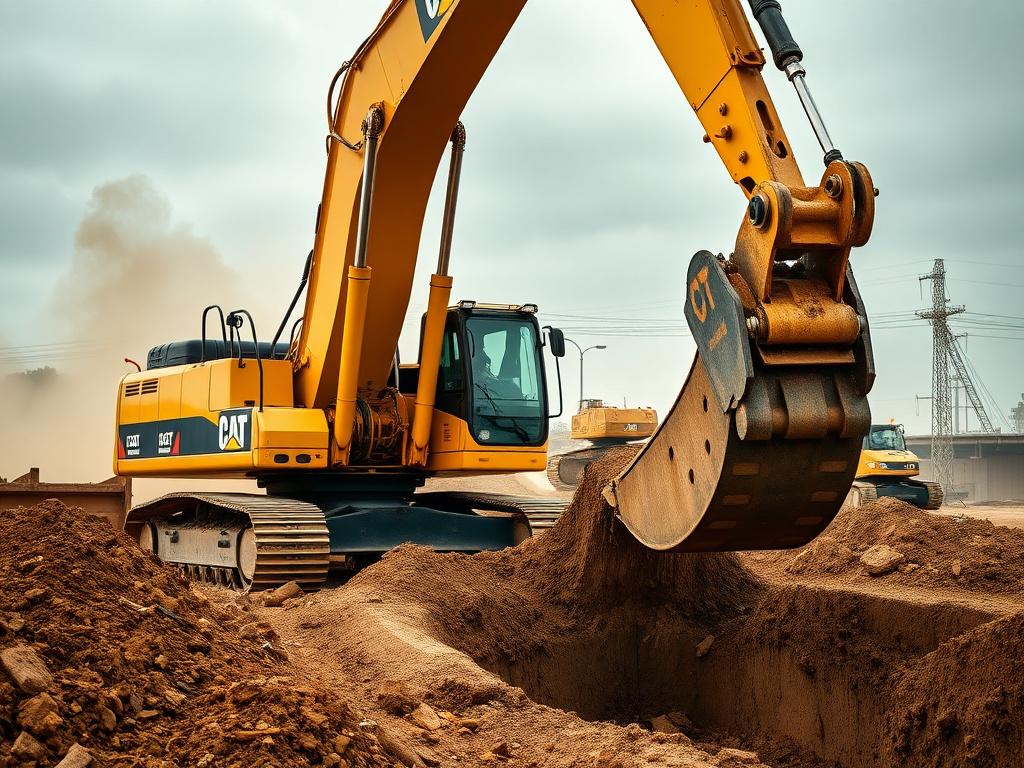
Heavy equipment ownership is the third variable. Excavators, backhoes, dozers, and compactors represent real capital investment and third-party property-damage potential just from being operated near other structures, utilities, and vehicles — which is why this trade's equipment and auto coverage looks different in structure from a trade running hand tools and a service van. Soil disturbance and fuel or hydraulic spills round out the picture with a pollution exposure that most above-ground trades simply don't carry at the same scale.
Taken together, these variables also affect market access, not just price. A contractor with a documented history of trench-safety compliance, a clean utility-strike record, and a specific, confirmed request for XCU coverage generally has an easier time placing coverage with a broader set of carriers than one who shows up with vague answers on depth, soil conditions, and locate procedures. In that sense, excavation's underwriting conversation looks less like a standard rate quote and more like a targeted risk review of the specific below-grade exposures a given job presents.
The coverage combination
What excavation and site work contractors typically carry, and why
The starting point for this trade isn't a checklist — it's confirming the one line that standard policies most often get wrong (XCU), then building outward from there against the equipment, auto, and environmental exposure that comes with heavy civil and site-prep work.
| General liability with confirmed XCU | A standard GL policy can limit or exclude explosion, collapse, and underground property damage entirely unless XCU coverage is explicitly added — this is generally the single most common gap found on excavation policies, and it needs to be confirmed in writing, not assumed. |
|---|---|
| Workers' compensation | Generally rated among the higher class codes in construction, reflecting heavy-equipment operation risk and OSHA-regulated trenching/cave-in hazard — a distinct injury profile from most above-ground trades. |
| Contractor's equipment floater | Owned excavators, backhoes, dozers, and compactors typically represent significant capital value, so this is usually written as a dedicated equipment floater rather than a standard small-tools policy — replacement cost and rental reimbursement matter more here than on most trades. |
| Commercial auto (with motor-truck-cargo attention) | Hauling heavy equipment and spoil material generally calls for attention to heavy-truck and motor-truck-cargo needs specifically, beyond a standard commercial auto policy built for pickup trucks and vans. |
| Pollution / contractors pollution liability | Soil disturbance and fuel or hydraulic spills from heavy equipment introduce an environmental exposure that standard GL typically excludes or sublimits — relevant to nearly every excavation job, not just specialty environmental work. |
| Umbrella / excess | Loss severity on a utility strike or underground infrastructure damage claim can be catastrophic, which makes higher limits a practical necessity on this trade even on jobs where a contract doesn't explicitly require it. |
General market patterns for excavation and site work contractors — actual coverage, limits, and eligibility depend on your state, carrier, and specific operations.
What's typically skipped or reduced
Coverage lines excavation contractors usually don't need
Excavation's coverage combination is one of the broadest on this site — most of the standard lines apply at real weight. The exceptions are narrow:
- ✓Professional liability (E&O) — generally not needed unless the firm also performs site-design, grading-plan, or civil-engineering work in-house, rather than executing a plan someone else engineered.
- ✓Builders risk — typically the general contractor's or developer's responsibility on most projects, though it's worth confirming on design-build site-work contracts.
What doesn't get reduced, even for smaller operations: XCU confirmation on the GL policy, and pollution liability for fuel and hydraulic spills, both of which apply on essentially every excavation job regardless of size. Equipment floater coverage scales with the value of owned machinery, but it doesn't disappear for a one-excavator operation — a single piece of heavy equipment can still represent the majority of a small contractor's asset base.
For how this trade's underground exposure compares to a trade with a completely different risk profile, see why generic contractor insurance quotes get your trade wrong.
Owned vs. rented equipment
Why excavation's equipment coverage isn't one-size-fits-all
Most trades on this site treat tools & equipment coverage as a relatively simple small-tools policy — a set dollar limit covering hand tools, testers, or portable power equipment. Excavation is different because the asset values involved are categorically larger, and because a meaningful share of contractors run a mix of owned and rented heavy machinery on any given job, which changes what actually needs to be insured and by whom.
Owned equipment is generally covered on a contractor's equipment floater, valued either at actual cash value or agreed value depending on the policy — a distinction worth understanding before a total loss happens, since actual cash value on an older excavator can come in well below what it costs to replace it with comparable working equipment. Rented equipment usually shifts part of the coverage responsibility to the rental agreement itself, which frequently includes its own damage waiver or requires the renting contractor to show proof of coverage naming the rental company as an additional insured for the rental period.
This matters operationally because a contractor who owns one aging excavator and rents a second unit for a large job is carrying two different coverage relationships on the same jobsite at the same time — one under their own equipment floater, one governed by the rental agreement's insurance requirements. Confirming both before the job starts, rather than assuming one policy blankets everything on site, is a routine but easy-to-skip step.
The same logic extends to attachments and specialty implements — trenchers, compactors, and grading blades are sometimes scheduled separately from the base machine they attach to, and a policy that lists the excavator but not its attachments can leave a real gap exactly where it's least expected. This is one more reason excavation coverage tends to be reviewed piece by piece rather than bundled into a single generic equipment line, the same way general liability is reviewed for confirmed XCU rather than assumed.
What actually moves your cost
Cost drivers specific to excavation and site work
The ranges and comparisons below describe typical market patterns observed across 2026 contractor-insurance cost guides, not this agency's filed rates — actual pricing depends on your state, carrier, experience modifier, and claims history.
Owned heavy equipment value and age
Equipment floater cost scales with replacement value, and older machinery can carry different underwriting treatment than newer equipment with documented maintenance.
Confirmed XCU exposure
Whether XCU coverage is explicitly confirmed (versus assumed) affects both eligibility and how an underwriter prices the account — this is treated as a distinct underwriting question, not a rider.
Utility-strike and claims history
A documented history of utility-strike or underground-damage claims is scrutinized closely, given how directly it predicts future severity on this specific exposure.
Typical depth and soil conditions
Deeper trenching and unstable soil conditions generally carry more severe cave-in risk than shallow, stable-soil site work, and that distinction shows up in how the account is underwritten.
Fleet size
More trucks hauling equipment and spoil material generally means more commercial auto and motor-truck-cargo exposure to account for.
Excavation & Site Work FAQ
Common questions from excavation and site work contractors
What is XCU coverage, and why does it matter so much for excavation contractors?
+
XCU stands for explosion, collapse, and underground property damage — three exposures that many standard general liability forms limit or exclude by default. For excavation and site work, underground utility damage is one of the most common and severe claim types, so confirming XCU coverage is explicitly included (not just assumed) is generally the single most important step in reviewing an excavation policy.
Does excavating insurance cover damage from hitting a gas line or fiber cable during digging?
+
It depends entirely on whether the policy includes confirmed XCU coverage and whether standard utility-locate procedures (like an 811/call-before-you-dig request) were followed. A policy without XCU coverage may limit or exclude underground utility-strike damage even though it looks like a standard third-party property-damage claim on the surface.
Why is workers' comp generally more expensive for excavation than for framing or finish trades?
+
This reflects a well-documented, directional pattern rather than an exact filed rate: excavation involves heavy-equipment operation and OSHA-regulated trenching and cave-in hazards, both of which carry higher injury severity potential than most above-ground trade work. Actual rates vary by state, carrier, and experience modifier.
Do I need pollution liability if I'm just doing site grading, not environmental remediation?
+
Generally, yes — contractors pollution liability isn't only for remediation specialists. Routine excavation work involving soil disturbance, fuel storage, and hydraulic equipment carries a fuel/hydraulic-spill exposure that standard GL typically excludes or sublimits, regardless of whether the job is described as environmental work.
Get excavation coverage that actually confirms your underground exposure
Tell us your typical trench depth, owned equipment, and utility-locate practices — we'll come back with a coverage combination that confirms XCU instead of assuming it's already there.
Related trades
See how a contrasting risk profile changes the coverage combination
General Contractors
Contractual and vicarious liability across every sub on the jobsite — a coordination risk profile instead of excavation's underground exposure.
Roofing Contractors
The highest fall-severity class code in construction — an above-grade risk profile that contrasts sharply with excavation's below-grade exposure.
Why Generic Quotes Get Your Trade Wrong
The head-to-head case for trade-specific coverage over a one-size-fits-all contractor policy.