Framing & Carpentry Insurance
Framing Contractor Insurance & Carpentry Insurance
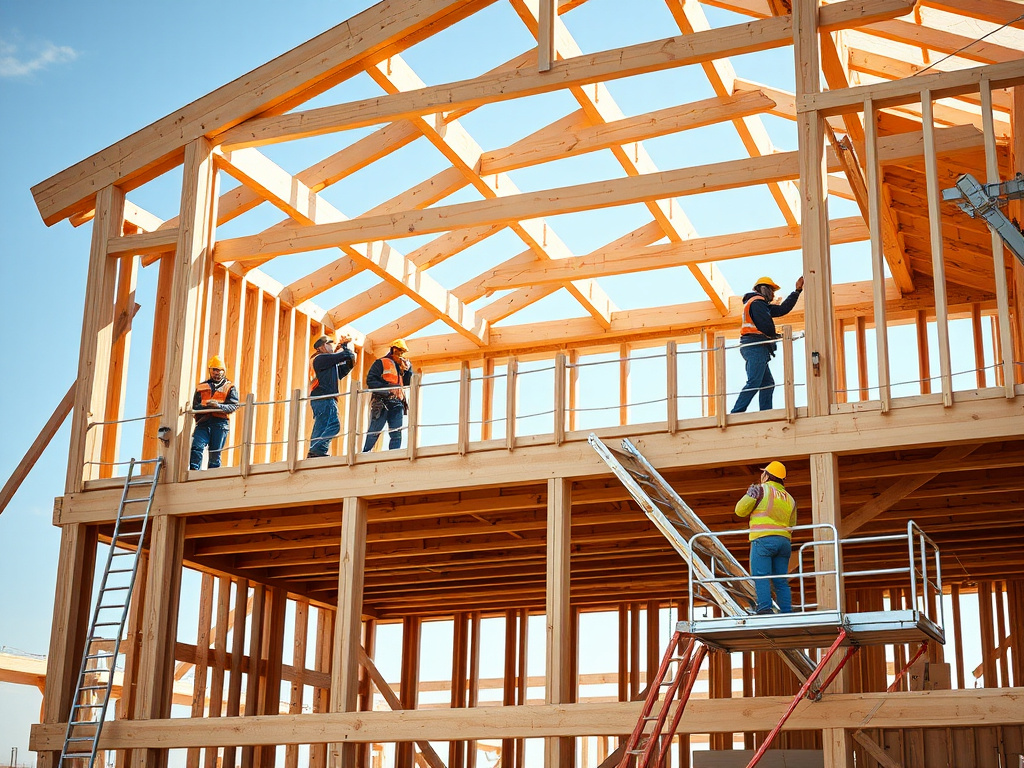
Framing crews take on a risk profile most other trades don't share: real fall exposure at height on a multi-story structure, combined with the pace of production framing and, in a lot of shops, a crew that's classified as subcontracted labor rather than employees. Coverage built for framing starts with those three facts, not a generic contractor template.
Why framing's risk profile is different
Height, pace, and crew structure — the three variables that actually drive framing risk
Search demand for this page splits in an instructive way. “Carpentry insurance” sees far more search volume nationally than “framing contractor insurance,” and that gap isn't noise — it reflects how many people in this trade actually describe what they do. A production framer on a multi-story residential build and a custom finish carpenter building cabinetry and trim are both searching for coverage under overlapping language, even though their underlying exposure looks different in degree. This page is built to serve both: framing's height and pace risk is the sharper end of the exposure, and finish/custom carpentry sits at a real but generally lower-severity point on the same spectrum.
The defining framing exposure is fall risk from working at height on a structure that, by definition, doesn't have finished walls, stairs, or guardrails yet. Second- and third-story framing, roof-truss setting, and open-floor work all carry real injury severity that single-story finish carpentry simply doesn't. That severity is why framing is rated meaningfully higher than finish trades for workers' compensation, even though it generally sits below roofing's class-code rate — framing crews aren't working a pitched, often-wet roof surface, but they are working open floors and ladders at real height, repeatedly, all day.
Pace compounds the height exposure. Production framing crews are paid and scheduled to move fast — a house gets framed in days, not weeks — and that pace increases both injury frequency (rushed ladder work, pneumatic nailer mishandling) and the odds of a workmanship error that surfaces later as a callback or a structural question during a later inspection. Pneumatic nailers specifically carry a well-documented nail-gun-injury pattern in this trade that shows up in workers' comp claims data independent of the fall-risk conversation.
The third variable — and the one that's easiest to get wrong — is crew structure. Framing is one of the most commonly subcontracted labor models in residential construction; a lot of framing work is performed by 1099 crews rather than direct W-2 employees. That raises two separate questions at once: a GL underwriting question (how much of your operation is subcontracted labor, and are those subs carrying their own adequate coverage), and a completely separate employment-classification question about whether those crews are properly classified in the first place. Both need to be answered honestly before a policy is quoted, because both affect what the coverage actually protects against.
The coverage combination
What framing and carpentry contractors typically carry, and why
None of these lines exist in isolation — they're reasoned as a combination against the height, pace, and crew-structure profile above. A custom finish carpenter working almost entirely single-story interior work will lean on this combination differently than a production framing outfit running multiple multi-story crews at once, but the underlying logic is the same.
| General liability | Covers third-party bodily injury and property damage on the jobsite — the base layer every framing or carpentry operation carries, and the line most contracts require proof of before a crew is allowed on site. |
|---|---|
| Workers' compensation | Framing is generally rated meaningfully higher than finish-carpentry or cabinetry work, reflecting fall and power-tool injury frequency, though typically lower than roofing's class-code rate. Framing crews working strictly single-story production homes are usually rated lower than crews doing multi-story or custom work at height. |
| Tools & equipment (inland marine) | Pneumatic nailers, compressors, saws, and framing-specific power tools represent real replacement cost and theft exposure on an open jobsite — a standard GL policy typically doesn't cover tools left on site overnight. |
| Contractor's equipment / rented-equipment coverage | Scaffolding, staging, and lift rentals used for multi-story framing often carry their own damage-waiver or coverage requirement from the rental company, separate from the crew's own tool coverage. |
| Commercial auto | Applies where the business owns trucks or trailers used to haul lumber, tools, and crews between sites — often smaller in scope for owner-operators running a single truck than for multi-crew framing outfits. |
| Builders risk | Typically carried by the general contractor or developer during the framing stage of new construction, but framing subs are frequently asked to confirm they're named or to carry their own on design-build or spec-build work. |
General market patterns for framing and carpentry contractors — actual coverage, limits, and eligibility depend on your state, carrier, and specific operations.
What's typically skipped or reduced
Coverage lines framing crews often don't need at full weight
Compared to roofing or excavation, a few coverage lines are generally less universally required for framing and carpentry — worth knowing so a quote doesn't load up on lines that don't match the actual operation:
- ✓Pollution/environmental liability — rarely applies unless the crew is also doing site work or handling treated-lumber disposal at volume.
- ✓Professional liability (E&O) — generally not needed unless the firm is doing structural design or engineering-adjacent work, which most framing operations don't.
- ✓Umbrella/excess — less universally required than for GCs or roofers, though large multi-story commercial framing jobs increasingly ask for it contractually.
What doesn't get reduced, even for smaller shops: workers' comp exposure on any height work, and tools & equipment coverage on pneumatic nailers and power tools, which represent real replacement cost even for a two- or three-person crew. Builders risk is worth confirming project-by-project rather than assuming the general contractor's policy automatically extends to a framing sub's exposure.
For a side-by-side look at how a generic contractor quote misses trade-specific distinctions like these, see why generic contractor insurance quotes get your trade wrong.
Crew structure, in practice
Working with subcontracted framing crews: two separate questions, not one
Because so much production framing runs on subcontracted labor, it's worth separating two questions that get collapsed into one in a lot of shop conversations. The first is an insurance-underwriting question: how much of the work on a given job is performed by your direct payroll versus by subbed-in crews, and do those subs carry their own general liability and workers' comp naming your business as additional insured. An underwriter reviewing a framing account will generally ask for certificates of insurance from every crew working under your contract, because a gap there becomes your exposure the moment a claim happens on a crew that turns out to be uninsured.
The second question is entirely separate and doesn't go away just because the insurance side is handled: whether those crews are properly classified as independent contractors in the first place, under your state's labor and workers' comp classification rules. A crew that shows up daily, uses your materials and jobsite schedule, and works exclusively for your company can look, to a state labor department, more like misclassified employees than genuine subcontractors — regardless of what the paperwork between you calls them.
That distinction matters for coverage in a very practical way. Workers' compensation exists to cover your employees; if a state later determines that a crew you treated as 1099 subcontractors should have been classified as employees, that finding can retroactively affect your workers' comp exposure and premium calculation, independent of whatever GL coverage was in place for the job itself. This is exactly why the topical framing on this page treats classification as a distinct exposure from the GL question about subbed labor, rather than folding both into a single “do your subs have insurance” checkbox.
In practice, most framing operations run a mix — some direct W-2 crew for higher-skill or supervisory roles, and subbed crews for volume production work — and that mix is exactly the kind of detail worth discussing before a policy is quoted rather than after a claim surfaces the gap. It's also one of the first things worth documenting clearly in your own contracts with subbed crews, since a written agreement specifying insurance requirements and scope of work supports both the underwriting conversation and the classification question if either is ever challenged.
What actually moves your cost
Cost drivers specific to framing and carpentry
The ranges and comparisons below describe typical market patterns observed across 2026 contractor-insurance cost guides, not this agency's filed rates — actual pricing depends on your state, carrier, experience modifier, and claims history.
Production vs. custom/finish mix
A shop doing mostly production framing on new-construction tracts generally carries a different risk (and rate) profile than one focused on custom finish carpentry and cabinetry, even under the same trade label.
Multi-story vs. single-story
Height is the single biggest lever in this trade. Crews working second- and third-story framing regularly are generally rated differently than crews confined to single-story slab-on-grade work.
Crew structure (1099 vs. W-2)
Subcontracted crews raise underwriting questions about verified coverage and proper classification — it's a real cost and eligibility factor, not just a paperwork detail.
Crew size and claims history
Payroll size scales workers' comp cost directly, and a clean claims history matters more in a trade where severity (not just frequency) drives underwriting attention.
Framing & Carpentry FAQ
Common questions from framing and carpentry contractors
Is carpentry insurance the same thing as framing contractor insurance?
+
They typically describe overlapping but not identical exposure. Framing carries the sharper height and pace risk of production work on a multi-story structure, while carpentry commonly includes lower-height finish and custom work. Both are generally built from the same coverage lines — general liability, workers' comp, and tools & equipment — but the workers' comp class and rate can differ meaningfully depending on how much of the work happens at height.
Does using 1099 framing crews instead of W-2 employees change what I need to carry?
+
It changes both your underwriting picture and your risk. Subcontracted crews reduce your direct payroll-based workers' comp exposure, but most GL underwriters will ask how much of your operation is subbed out and whether those subs carry their own adequate coverage naming you as additional insured. It doesn't eliminate the need for coverage — it shifts where the questions get asked.
Do I need builders risk insurance as a framing subcontractor, or does the GC's policy cover me?
+
It depends on the project and the contract. On many jobs the general contractor or developer carries builders risk covering the whole structure during construction, but framing subs are frequently asked to confirm they're a named party or to carry their own, especially on design-build or spec-build work. Confirm this project-by-project rather than assuming coverage automatically extends to your work.
Why is framing rated higher for workers' comp than finish carpentry, but lower than roofing?
+
This reflects a well-documented, directional pattern in workers' comp classification rather than an exact filed rate: framing involves real height exposure on open, unfinished structures plus pneumatic-tool injury risk, which is generally rated higher than lower-height finish and cabinetry work. Roofing typically sits above framing because pitched, often weather-exposed roof surfaces carry the highest fall-severity profile in construction. Actual rates vary by state, carrier, and experience modifier.
Get framing and carpentry coverage built for how you actually work
Tell us your mix of framing vs. finish work, your crew structure, and typical building height — we'll come back with a coverage combination priced to that, not a flattened generic contractor quote.
Related trades
See how a contrasting risk profile changes the coverage combination
Concrete & Masonry Contractors
Heavy material handling and completed-operations structural exposure — a ground-level risk profile instead of framing's height risk.
Roofing Contractors
The highest fall-severity class code in construction, and the hardest GL market — see how roofing's height risk compares to framing's.
Why Generic Quotes Get Your Trade Wrong
The head-to-head case for trade-specific coverage over a one-size-fits-all contractor policy.